You decide to go with the safer, smarter option, and use your phone’s remaining battery power to call your friend Honza for help. He’s a nerdy professional clarinetist who doesn’t have the best people skills, but you’ve known him for a long time and can count on him when you’re in a pinch. You explain to him that you were out on your nightly bike ride and popped a tire, but leave out the skeleton. It’s been a long day, you’ve probably been hallucinating the entire thing.
You tell Honza how to find you and he promises to be there in half an hour. Just as he hangs up, your phone dies. Until Honza arrives, you have no way of contacting anyone.
You sit down on a rock facing the entrance to the mine so you can keep an eye on it. You are in no mood for surprises tonight. The temperature starts to drop and you begin to shiver, and the sky darkens.
As the evening turns into night, you hear strange sounds from the mineshaft. A low wailing floats through the air, broken every few minutes by a loud screech. The shuffling of footsteps puts you on edge, along with loud cracks, almost like breaks in bone.
It’s been about twenty minutes since you called Honza, and the noises have made you very jittery. You hear a loud bang from the mine and jump to your feet. You grab your bike and start dragging it behind you as you walk back up the road, hoping to run into Honza. You cannot stay by the mine for another second.
The noises follow you, prompting you to move faster. Despite your exhaustion, you force yourself to run, especially when you hear the thumping of feet behind you. You run for about five minutes when a new noise breaks through the woods. Tires crunch against the ground and an engine rumbles, and Honza’s SUV finally comes into view.
You want to weep with relief, but you can still hear the noises behind you, urging you into action. You shove your bike into the trunk of Honza’s car and scramble into the passenger’s seat.
“Drive,” you order him before he can say anything.
Honza frowns, his nose wrinkled and oily. His greasy brown hair falls in his eyes, but he can still see well enough to execute a careful U-turn and start back towards the main road.
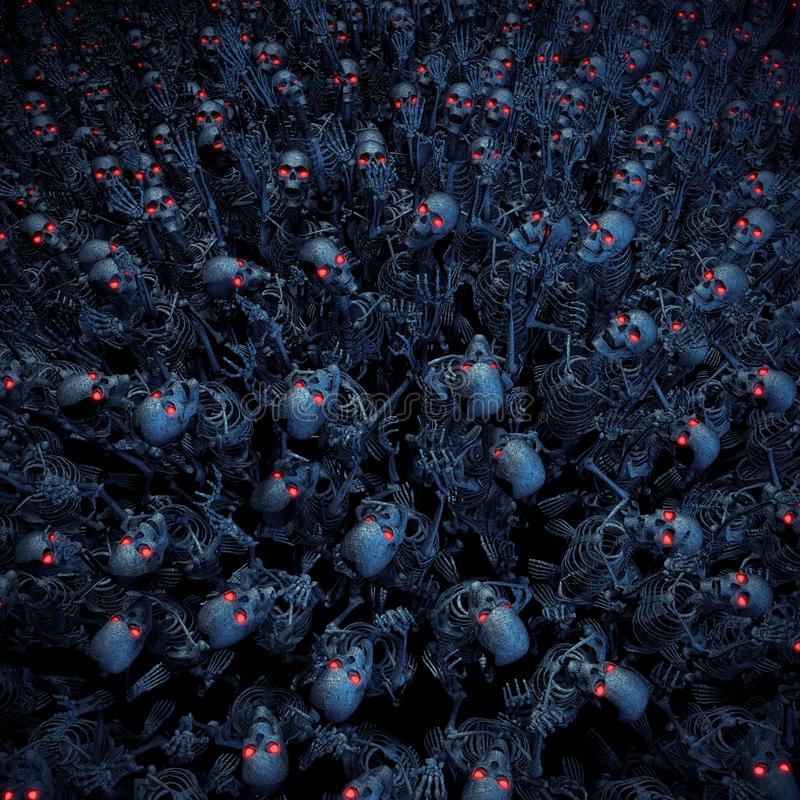
You glance back, holding back a gasp when you see a cluster of skeletons racing after the car. They swerve back and forth, clumsy on their bare feet, but move with inhuman speed and keep pace with the car. A few of them run on all fours like animals, and it takes everything in you not to scream. Honza doesn’t know, and you would like to keep it that way. If he knows, he will freak out, and then you will both be doomed.
You break through the tree line and are finally back on the main road where you were biking earlier. You allow yourself a small sigh of relief, a seed of hope growing in your heart. But when you crane your neck behind you, the skeletons are still there.
You get closer to town and Honza asks, “Shortcut?”
There are two ways back home. One is the long way that most people take since the shortcut is hard to find. There would be more chances to lose the skeletons on that route.
The other option is the shortcut, unknown to many. It’s a straighter shot back to town, but most of it is in the barren desert and the skeletons could easily follow you.
Ignoring your instincts again, you creep closer to the mine and activate your phone’s flashlight. You walk up to the cart and look inside, finding a few unrefined gems—ruby, quartz, sapphire. After checking that no one is around, you tuck a few of them into your pocket.
Another sign lays in the dirt, rusted and covered in dust. It says “Danger! Do Not Enter!” painted over a skull and crossbones.
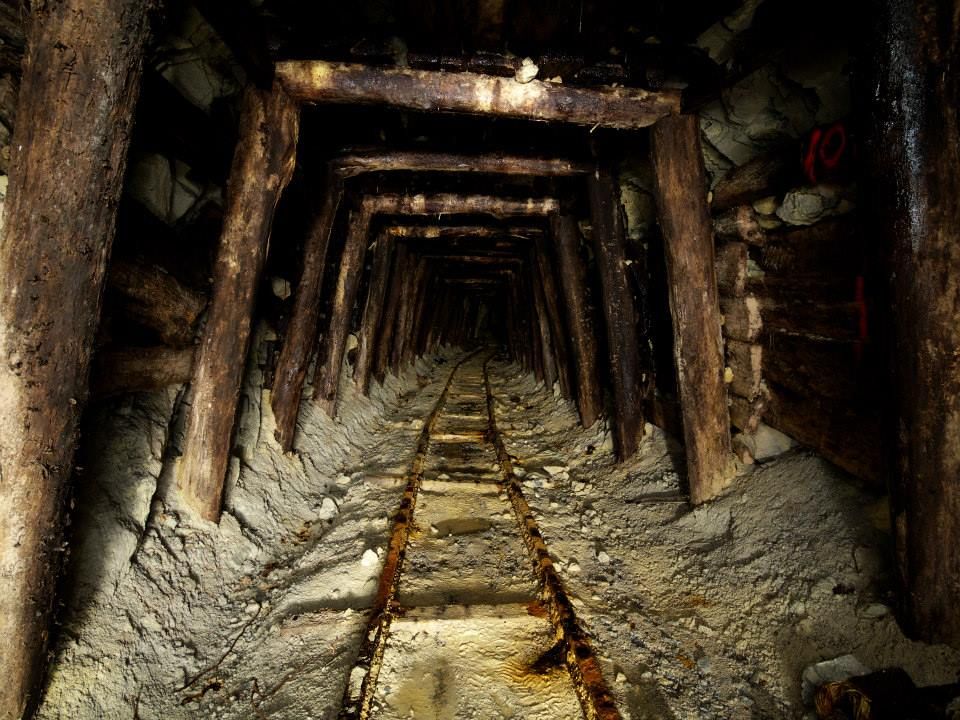
You swallow your fear and step into the mine. After a moment of indecision, you grab the oil lamp at the front in case your phone dies before you leave the mine. With the two light sources stretched out in front of you, you slowly creep farther into the mine, stumbling a few times over the tracks.
Almost immediately, sounds from the outside disappear, plunging you into complete silence. You can’t even hear your own footsteps or breathing. Goosebumps raise on your arms and you pull your jacket sleeves down to your wrists. The hair on the back of your neck stands up.
Even with the combined light of your flashlight and the oil lamp, you can only see about two feet in front of you. You walk slowly, carefully. Your heart thumps against your chest almost painfully, and you are hyper-aware of every nerve in your body.
There is no sign of the skeleton yet, and your anxiety only grows. You begin to think that this was a bad idea, but when you turn around there are three different paths behind you, and you can’t tell which one you came from. You take a moment to think and ultimately decide that the safest course of action is to continue deeper into the mine. Hopefully that way you will eventually exit from the other end of the mine.
You continue in the eerie silence, holding your phone close and tightening your grip on the oil lamp in case you need to use it as a weapon. By this point, you’ve been walking for about twenty minutes. A few feet in front of you, the tunnel starts to lighten, and you sigh with relief, hoping it means you’ve reached the end of the mine.
Instead, the tunnel continues but there is an opening in the wall to the right where the light is coming from. A pit forms in your stomach as you walk into the little cave, your legs trembling.
The first thing you see is candlelight coming from dozens of candles sitting on the floor. The flames flicker and dance across the walls, casting strange shadows. You turn your gaze on the rest of the room and your feet become rooted to the floor.
A small, rickety, wooden table sits in the middle of the cave, looking a hundred years old. A dusty teapot rests in the middle of it, surrounded by matching teacups and saucers. A plate of moldy fruitcake accompanies them, flies buzzing around it hungrily. Four chairs circle the table, and your heart skips a beat as you notice what sits in two of them.
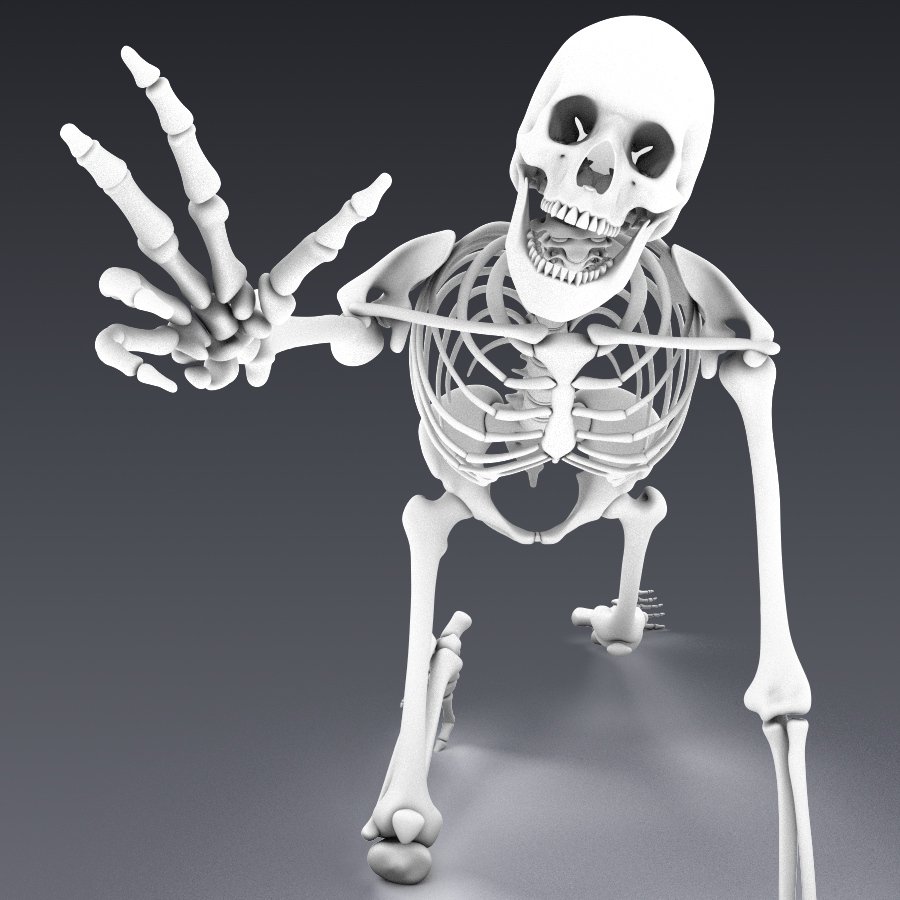
Two bony skeletons. Stringy hair drips from the skull of one of them, but otherwise they are indistinguishable from the one you saw earlier. The hairless one could be the same one you saw, but something tells you it isn’t. It holds a teacup in its skeletal hand. The other two chairs are empty, and that somehow scares you even more than the skeletons.
You want to turn around. You want to run. You want to scream. But your muscles are frozen and you can only watch as the skeletons shift and look at you.
They open their mouths and say in identical, raspy, gravelly voices, “Would you like some tea?”
You finally force yourself to move and spin on your heels to run, but the entrance is blocked by another skeleton. You recognize without a doubt that this is the one you followed, and your entire body shakes as you look at it. Even without eyes, you can tell it is staring at you.
“Join us,” the skeleton says in the same voice as the others and reaches a hand towards you.
When I told my friends I needed to create a meme for homework, they immediately suggested this photo. It is from a live musical theatre production I was in a few years ago. I played the March Hare in a kids version of Alice in Wonderland, and this picture was among many taken of the live show. I really enjoy it since it shows me in the middle of a great expression along with the actress who played Alice. This picture is a cropped version of the original, which also had the Mad Hatter and the Dormouse in strange positions. The image itself is funny to look at, so I was hoping that it would contribute to the humor of the meme even before reading the text.
For the text, I tried to find a topic that many people would instantly connect with that also fit with the picture. Many memes in this style are designed so that the image demonstrates the text or reacts to it, so I took a few minutes to study the image and come up with an idea. Eventually, I thought of the sibling message, because many people can relate to it. So many people have have experienced that relationship and have made fun of their sibling or been made fun of by their sibling, so I thought it would reach a wide audience that would enjoy it. I think it fits the image well and adds to the humor.
In a sense, you could say that this meme subverts the traditional image of family. The general stereotype is that everyone in a family loves each other and is nice to each other, but anyone who has siblings knows that more often than not, peace is rare among relatives. Someone is always annoying someone else, or making fun of them, or telling on them, or getting them in trouble.
Mainly, with this meme I tried to create that instant recognition most people feel when they see memes. I wanted people to look at it and laugh and say they understand. I wanted people to relate to it and remember that many people share their same experiences, which is an important thing to know especially since there has been a lot of drama in our culture concerning different races, genders, sexualities, and other identities. This meme subtly reminds people of that, reinforcing the idea in their minds almost unknowingly. In that way, it is unexpected and does not face resistance.
I have a few ideas rolling around in my head about this Collaborative Composition and Analysis Assignment. I am not one-hundred percent sure yet what I will do, but I am leaning towards working with option #3.
I like the idea that we could create a new collaborative writing project through new media. I am thinking about writing a short story of some kind using characters, plots, places, and ideas generated online or through friends/classmates, and then present it using hypertext as kind of a “Choose Your Own Adventure” story, with different choices and endings. That way I could have conscious participation (myself), contributory participation (friends/classmates), and unwitting participation (ideas found online). I think that could be really fun and interesting to take on.
I especially like this idea because when I explore a new story idea, I tend to write longer novel-length works with a specific outcome/ending in mind, so I am interested to try to write a short story that still tells a full tale, and has different endings based on what the reader chooses. I love reading/playing “Choose Your Own Adventure” books/games, and I wrote a short program of one in my Computer Science class, so I think it would be really cool to write my own as an actual story. It would also be really fun to incorporate new media aspects to it, like hypertext, pictures, or even sound effects.
During class on Monday I will probably talk to my classmates and see what they think about the idea, or ask if they have any suggestions to take it further. I am very excited to start working on this project and to see what everyone else comes up with!
When I spent ten minutes in silence, I noticed many things. I heard the constant buzzing outside Glass Hall through my open window. Voices carried through the air from the hall outside my apartment or from the stairs leading to the gate. I could hear the clang of the gate opening and closing, as well as a rhythmic banging as if someone was hitting a metal railing over and over for about five seconds. My roommates were getting ready to go to class–printing papers, zipping backpacks, drinking water, washing dishes.
I found my mind wandering, but not in the way it usually does. Usually, when my mind wanders I think about my plans for the day or week or whatever I had just watched/read, or what I planned to watch/read, or I think of ideas for the story I am currently working on. This time, however, I was focused on sound. My mind wandered to thoughts like “What is making that buzzing sound? Why? Where are those people going? Who are they talking to?” As I thought and listened, I looked around my room but I did not notice anything because I was focused on sound, not sight. I looked at my room as I always had, and I noticed nothing out of the ordinary. It was just me, sound, and my thoughts.
The biggest thing I noticed was myself. I was lying on my bed with my hands on my stomach, and with nothing but soft background noise to occupy me, my attention was drawn to my body. I felt the bed beneath me conforming to my body. My heartbeat resonated through my hands on my stomach. I observed the length of my breaths and felt my stomach rising and falling with each one. My bare arms were cold, the rest of my body a comfortable temperature. I felt the tug on my head made by my braided hair and its weight on my shoulder. My rings, bracelet, watch, and necklace felt like a second skin since I wear them every day. It was almost as if there was nothing but me.
I felt that present-ness again when I switched to the heightened sound environment. For that, I played three of my most “hype” songs using headphones with the volume all the way up. Those songs are ones that always get me moving and seem to lift my body up with their energy, so I immersed myself in them and tried to focus solely on them. With the music playing so loud, it felt like it was really in my head. The sound was coming through my headphones, but it felt as if there was a speaker in the center of my brain playing the music throughout my entire body, but mostly my head. I could barely fight the instinct to dance as if no one was watching. The music took over everything, so even when I looked around the room or at other people, I felt detached from it all as if nothing else existed.
With this focus on the music itself, I was aware of things I had not noticed before in the songs. There were instruments I had not heard before and harmonies I never noticed. There were shifts in the presentation of the music–on the left side, right side, or both–that were completely new to me and changed the way I heard it. Unlike before when everything was silent, my mind could not wander because it was so focused on the music and noticing things there that I had never heard before.
Both experiences were very interesting and informative. The ten minutes of silence passed a lot quicker than I had expected since I was focused on being aware and noticing everything I was feeling–emotionally and physically. With the silence, I was very aware of my body while still listening for background noise and observing my wandering thoughts. With the heightened sound, I was aware of my head as I listened to the music that felt like it was coming from me. It felt as though I was standing next to the artists as they recorded their songs.
These experiences have definitely taught me to be more aware of sound, as it really does have a significant impact on life. Even the absence of sound means something if you are willing to listen.
Undeniably, it had been a great day. I had not been to Disneyland in over a year, the ticket was only forty dollars, and even though I went alone I still enjoyed it a lot.
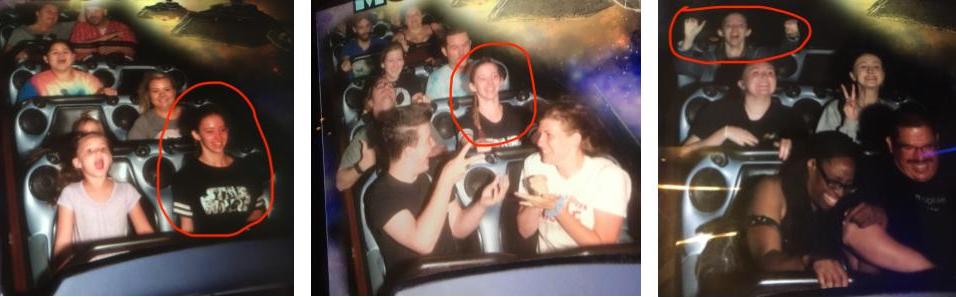
I went on Hyperspace Mountain three times:
I met Chewbacca and Darth Vader.
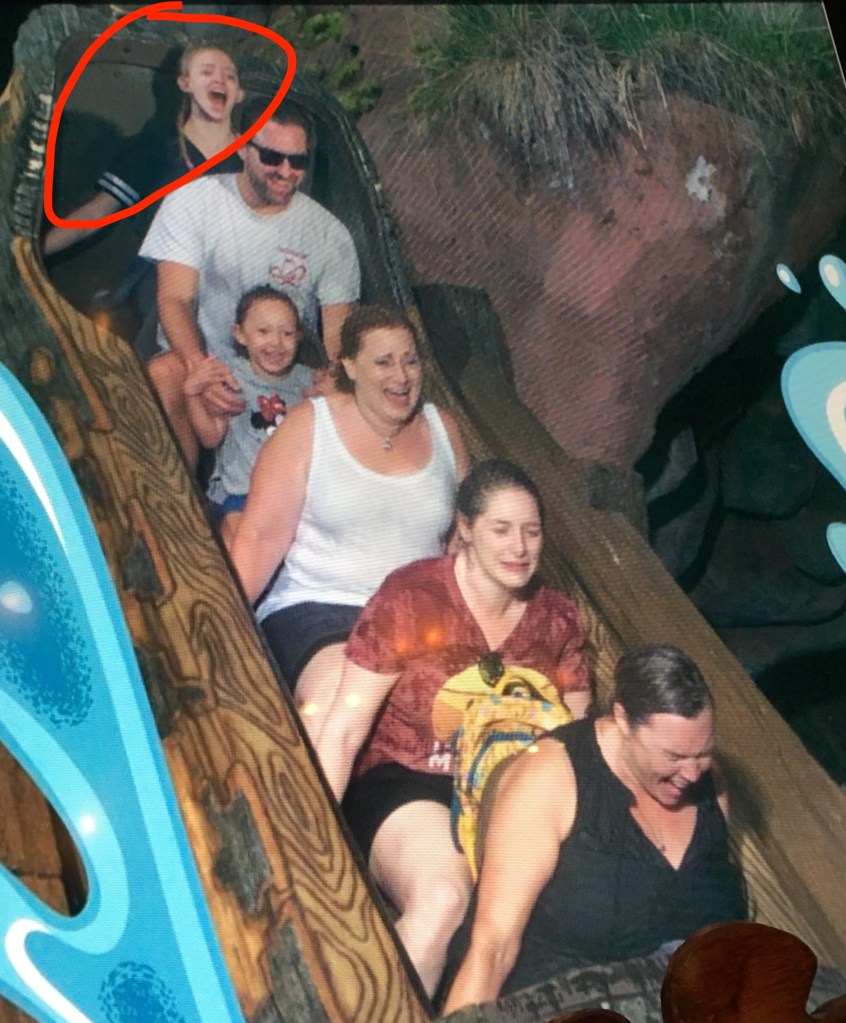
And among so many others, I went on Splash Mountain (these are just the attractions I have pictures for):
It made sense that I wanted to share this experience and tell my friends and family how much fun I had. But why did I want to do it on social media?
After I went to Disneyland by myself a few weeks ago after being lucky enough to get a discounted ticket, my first instinct was to post all of the pictures I had taken on social media. Throughout the day I had been updating my Snapchat story so that people I was close with could see what I was up to, and the next day after the excitement was over, I seriously considered posting the pictures on Facebook. But as soon as I asked myself why I wanted to, I was disappointed.
Was it to share with all of my friends and family how amazing the day had been in an efficient manner? That was the lie I tried to tell myself. No, the truth was that I wanted approval and I wanted my Facebook friends—many of whom are only distant acquaintances—to know how exciting my life was. I wanted them to see that I went to Disneyland and to feel jealous about the opportunity.
But why did I feel that? Why did I seek out validation from strangers and distant relatives I rarely talk to through the Internet? Why did I feel like I was doing something wrong if I did not?
The troubling thing about all of these questions is that I have never had to ask them before. Prior to social media, we just shared fun experiences in our lives through letters, emails, phone calls, or conversations in person. What is it about social media platforms like Facebook, Instagram, and Snapchat that make us want to replace the personal connection that comes when sharing things in person with a certain amount of likes or comment from people we barely know?
Ever since these platforms became popular, I have been asking myself these questions. While I am generally very up-to-date with new technology, social media has been the one exception. When everyone started joining Facebook, Instagram, or Snapchat in middle and high school, I refused. Texting, calling, and emailing worked fine for me, thanks. While sometimes I felt left out because my friends would all be communicating through Snapchat, I never understood the appeal in taking random pictures (oftentimes of only a portion of your face) with strange filters and sending them to people with no context. It seemed stupid to me, but I can understand that it can addicting or that once it becomes habit, it is hard to break.
Near the end of my senior year of high school, I fell into that trap. My friends finally convinced me to create a Snapchat and I am ashamed to say that it is one of my most used apps. My social media presence only grew from there, as I eventually joined Instagram as well, although that account is mainly used to apply for scholarships, thankfully. Then in my freshman year of college, I created a Facebook account since most clubs used them to communicate. The more I use it, the more I feel myself getting sucked in. I post on Facebook very rarely in an attempt not to get too involved and to keep my profile clean in case future employers look at it, but I scroll through other people’s posts much more than I would care to admit. I eventually ended up unfriending one person just because they posted so much about things I was not interested in and it was cluttering up my homepage, and that fact demonstrates how invested I had become in following other people’s lives. Sometimes it is nice to see what others are up to, but then I think, “Is this something they would have told me in person?” Usually, it is not. So why is it something they want to share with the entire world?
For example, during my Disneyland trip, I had the opportunity to watch the marching band perform a number of songs, including a medley of tunes from The Lion King. The band was amazing, and everyone loved it, myself included. I loved it so much that for some reason, when the band began playing “Circle of Life,” I started crying. Music is very important to me, and I really enjoy listening to soundtrack music in particular, so the combination of emotions I was feeling just by being at Disneyland, doing it alone, having a wonderful day, standing in front of the castle, and listening to that song all hit me at once, and it was all I could do to hold back my tears. The song was–as my mother and I call only very special songs–“achingly beautiful.”
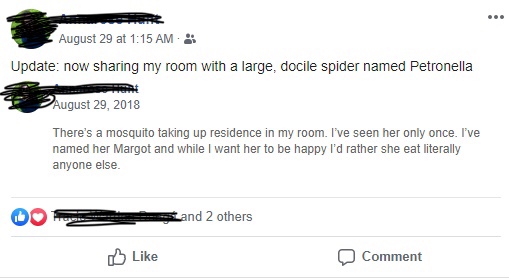
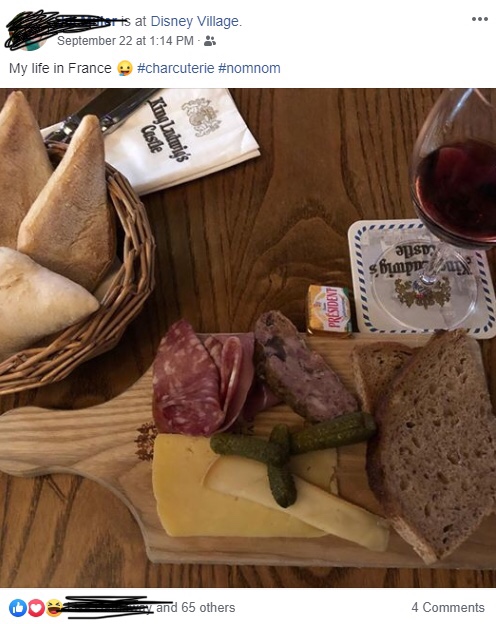
How could I have shared that intimate moment with such a distant audience? How do people share those things on social media with other people they barely know? Or even the smaller things, like:
I mean, what is the point of sharing this with the world?
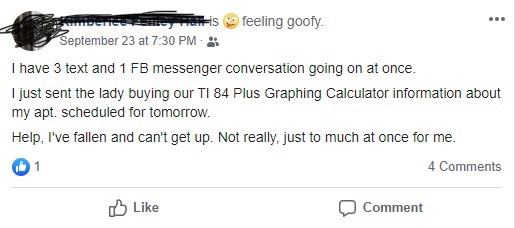
Or this?
There is obviously no desired reaction to this besides jealousy.
I understand the merits of social media, though, I really do. Sometimes it is the only way to contact a person or maybe that online community you found is exactly what you need to help you through a tough time or to serve as a safe space to share things. But at the same time, it feels like a cancer. Social media has taken control of our lives to the point where if we get a notification, we stop what we are doing to immediately check it and are frequently disappointed if it is not from Snapchat or Instagram. I have noticed how invested I have become in these platforms, but at this point it seems like there is very little I can do about it. I need Facebook for some classes, clubs, and jobs, and I need Snapchat to communicate with the people I want to hang out with but do not have phone numbers for.
At the end of this summer, I was on the verge of closing my Snapchat account. I rarely talk about anything of substance when I use Snapchat, and I could easily share the photos and videos I send through regular text or email. When my friends send long rant videos about their days, they annoy me and I don’t want to watch the entire clip. Add those facts to my initial resistance to Snapchat and it makes sense why I wanted to get rid of it. Then I went to training to be an Orientation Leader and my OL team leader immediately suggested we create a Snapchat group chat to keep in touch. How could I delete it now when it would be essential in communicating with my team? Even though I barely contributed to the conversation in the group chat, I always enjoyed seeing what the others were up to, and even though Orientation is over that group chat is still used which makes me feel as though I can never get rid of Snapchat. If I did, I would miss wonderful moments such as my OL team trying to generate excitement for the We Are Chapman event during Orientation, or performing our last OL chant after an amazing week.
Even when I was at Disneyland and updating my Snapchat story, I found myself wondering why. I told myself it was because I was waiting in line and I had nothing better to do, but in the back of my mind I knew it was because I wanted to show off this wonderful day I was having. I wanted people to see it, and the next day when I was on Facebook, I wanted all of those people that had not seen my Snapchat the day before to see it too.
Ultimately, I restrained myself and settled for sharing the experience with only the people closest to me either in person or by phone, and I am so glad I did. I would have been so disappointed in myself if I had used Facebook, because it would have been so unnecessary and it would have further solidified the platform’s hold on me. It would have slowly turned me into a person who is obsessed with likes, follows, and creating the perfect online image—a person I do not want to be. If I did not feel the need to call or text someone to tell them all about my day at Disneyland, then they simply did not need to know unless we ran into each other, started talking, and stumbled upon the topic. Besides, people only post the “perfect” moments of their lives anyway. Their stories are filled with gourmet meals, luxurious vacations, and extravagant outings, but never that time they tripped and dropped their food or forgot their passport or had a bad breakup. Because of these unspoken rules, it is hard to trust what people post anyway. So why should I post about my day when I just wanted to get a certain amount of likes and move on?
Going to Disneyland was a great experience. But not everyone needs to know that, and that is okay.
What interests me most about new media is simply the fact that it is quickly becoming more pertinent and popular because of our increasingly technologically-oriented lives. I am a supporter of all the technological advances we have made, so I enjoy exploring all of them, whether they are video games, smart devices, or new ways of being creative.
As for composing new media, I have a little experience with it. In high school I created a website for a Physics project, but I chose that medium simply in an attempt to be different from the rest of the class. I was also required to maintain a website that tracked my achievements and goals. In addition, I have a profile on a social media-like website called Wattpad through which users can read and write whatever they like–in my case, fan fiction. I have been a member for over 6 years, read hundreds of stories, and written quite a few of my own.
However, I have never written a blog, news article, or podcast. I have not experienced virtual reality, and I have not participated in discussion boards besides the ones required in my classes. I also try not to engage with typical social media too much, so my Facebook and Instagram accounts have very little activity and exist mainly for scholarship purposes or to connect with on-campus clubs. I have a LinkedIn account and I do my best to keep it updated, but in my current stage of life I rarely use it.
I am currently contemplating a Computer Science minor, which is part of the reason I am interested in this class. Having the knowledge to both write new media content and be able to code it would be very exciting. Keeping this in mind, throughout this class I hope to gain a better understanding of what exactly new media is and the benefits it holds in comparison to writing regular stories, articles, novels, or other more “traditional” mediums of writing.


 Tara's Blog