Undeniably, it had been a great day. I had not been to Disneyland in over a year, the ticket was only forty dollars, and even though I went alone I still enjoyed it a lot.
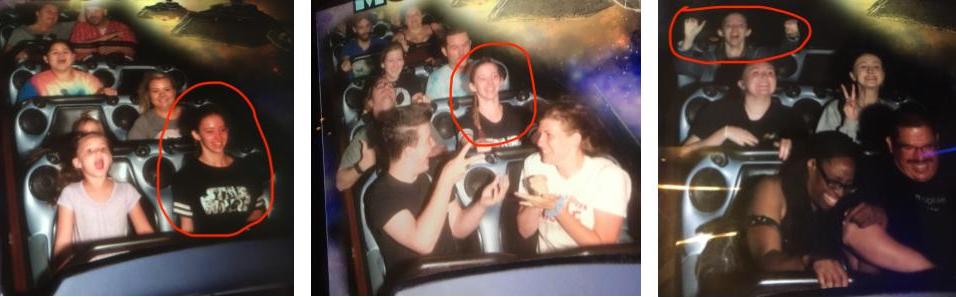
I went on Hyperspace Mountain three times:
I met Chewbacca and Darth Vader.

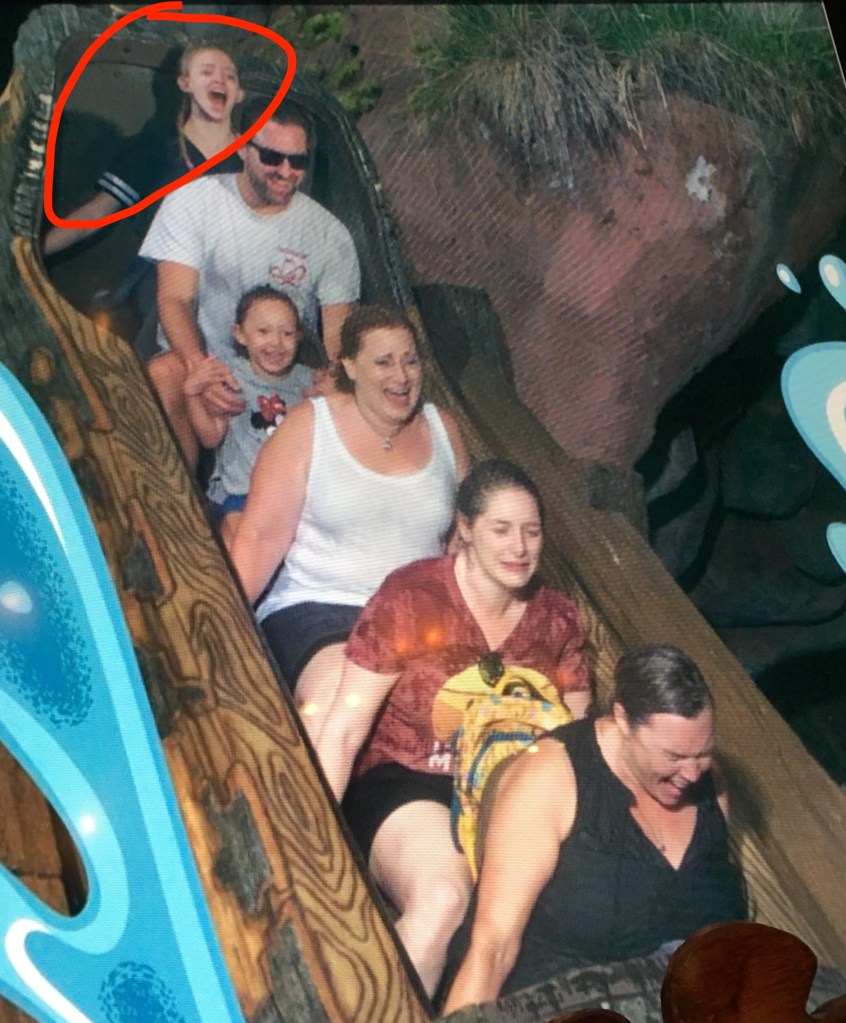
And among so many others, I went on Splash Mountain (these are just the attractions I have pictures for):
It made sense that I wanted to share this experience and tell my friends and family how much fun I had. But why did I want to do it on social media?

After I went to Disneyland by myself a few weeks ago after being lucky enough to get a discounted ticket, my first instinct was to post all of the pictures I had taken on social media. Throughout the day I had been updating my Snapchat story so that people I was close with could see what I was up to, and the next day after the excitement was over, I seriously considered posting the pictures on Facebook. But as soon as I asked myself why I wanted to, I was disappointed.
Was it to share with all of my friends and family how amazing the day had been in an efficient manner? That was the lie I tried to tell myself. No, the truth was that I wanted approval and I wanted my Facebook friends—many of whom are only distant acquaintances—to know how exciting my life was. I wanted them to see that I went to Disneyland and to feel jealous about the opportunity.
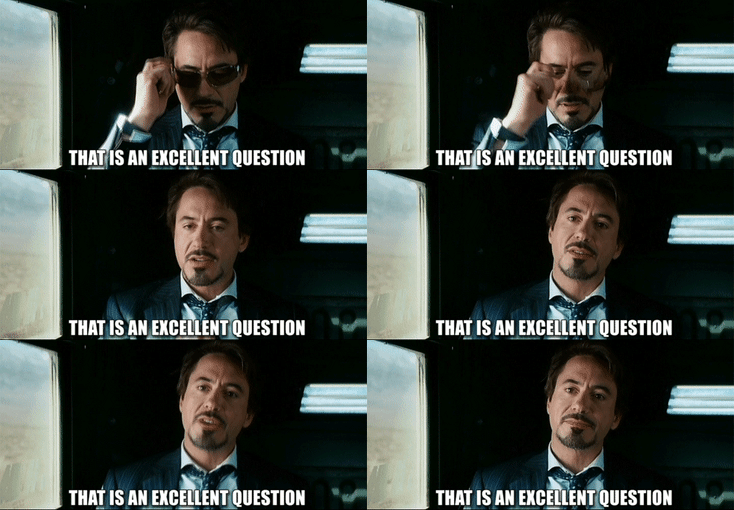
But why did I feel that? Why did I seek out validation from strangers and distant relatives I rarely talk to through the Internet? Why did I feel like I was doing something wrong if I did not?
The troubling thing about all of these questions is that I have never had to ask them before. Prior to social media, we just shared fun experiences in our lives through letters, emails, phone calls, or conversations in person. What is it about social media platforms like Facebook, Instagram, and Snapchat that make us want to replace the personal connection that comes when sharing things in person with a certain amount of likes or comment from people we barely know?
Ever since these platforms became popular, I have been asking myself these questions. While I am generally very up-to-date with new technology, social media has been the one exception. When everyone started joining Facebook, Instagram, or Snapchat in middle and high school, I refused. Texting, calling, and emailing worked fine for me, thanks. While sometimes I felt left out because my friends would all be communicating through Snapchat, I never understood the appeal in taking random pictures (oftentimes of only a portion of your face) with strange filters and sending them to people with no context. It seemed stupid to me, but I can understand that it can addicting or that once it becomes habit, it is hard to break.
Near the end of my senior year of high school, I fell into that trap. My friends finally convinced me to create a Snapchat and I am ashamed to say that it is one of my most used apps. My social media presence only grew from there, as I eventually joined Instagram as well, although that account is mainly used to apply for scholarships, thankfully. Then in my freshman year of college, I created a Facebook account since most clubs used them to communicate. The more I use it, the more I feel myself getting sucked in. I post on Facebook very rarely in an attempt not to get too involved and to keep my profile clean in case future employers look at it, but I scroll through other people’s posts much more than I would care to admit. I eventually ended up unfriending one person just because they posted so much about things I was not interested in and it was cluttering up my homepage, and that fact demonstrates how invested I had become in following other people’s lives. Sometimes it is nice to see what others are up to, but then I think, “Is this something they would have told me in person?” Usually, it is not. So why is it something they want to share with the entire world?

For example, during my Disneyland trip, I had the opportunity to watch the marching band perform a number of songs, including a medley of tunes from The Lion King. The band was amazing, and everyone loved it, myself included. I loved it so much that for some reason, when the band began playing “Circle of Life,” I started crying. Music is very important to me, and I really enjoy listening to soundtrack music in particular, so the combination of emotions I was feeling just by being at Disneyland, doing it alone, having a wonderful day, standing in front of the castle, and listening to that song all hit me at once, and it was all I could do to hold back my tears. The song was–as my mother and I call only very special songs–“achingly beautiful.”
How could I have shared that intimate moment with such a distant audience? How do people share those things on social media with other people they barely know? Or even the smaller things, like:
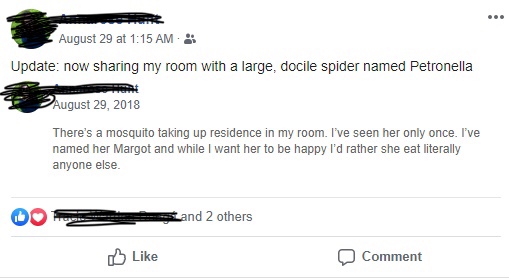
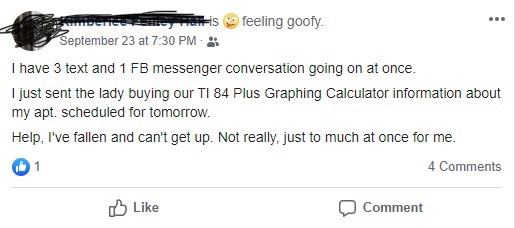
I mean, what is the point of sharing this with the world?
Or this?
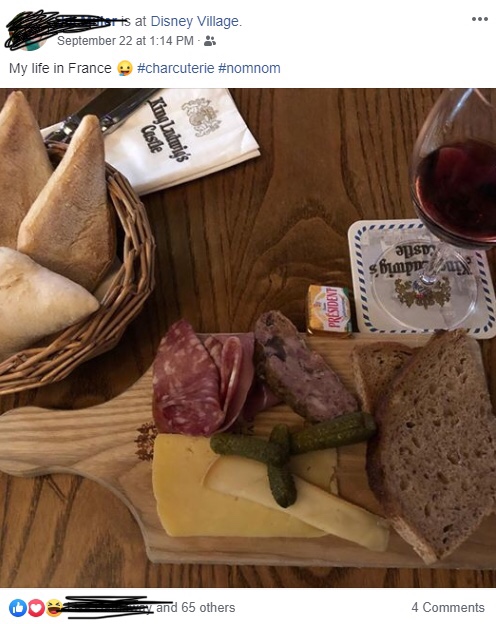
There is obviously no desired reaction to this besides jealousy.
I understand the merits of social media, though, I really do. Sometimes it is the only way to contact a person or maybe that online community you found is exactly what you need to help you through a tough time or to serve as a safe space to share things. But at the same time, it feels like a cancer. Social media has taken control of our lives to the point where if we get a notification, we stop what we are doing to immediately check it and are frequently disappointed if it is not from Snapchat or Instagram. I have noticed how invested I have become in these platforms, but at this point it seems like there is very little I can do about it. I need Facebook for some classes, clubs, and jobs, and I need Snapchat to communicate with the people I want to hang out with but do not have phone numbers for.
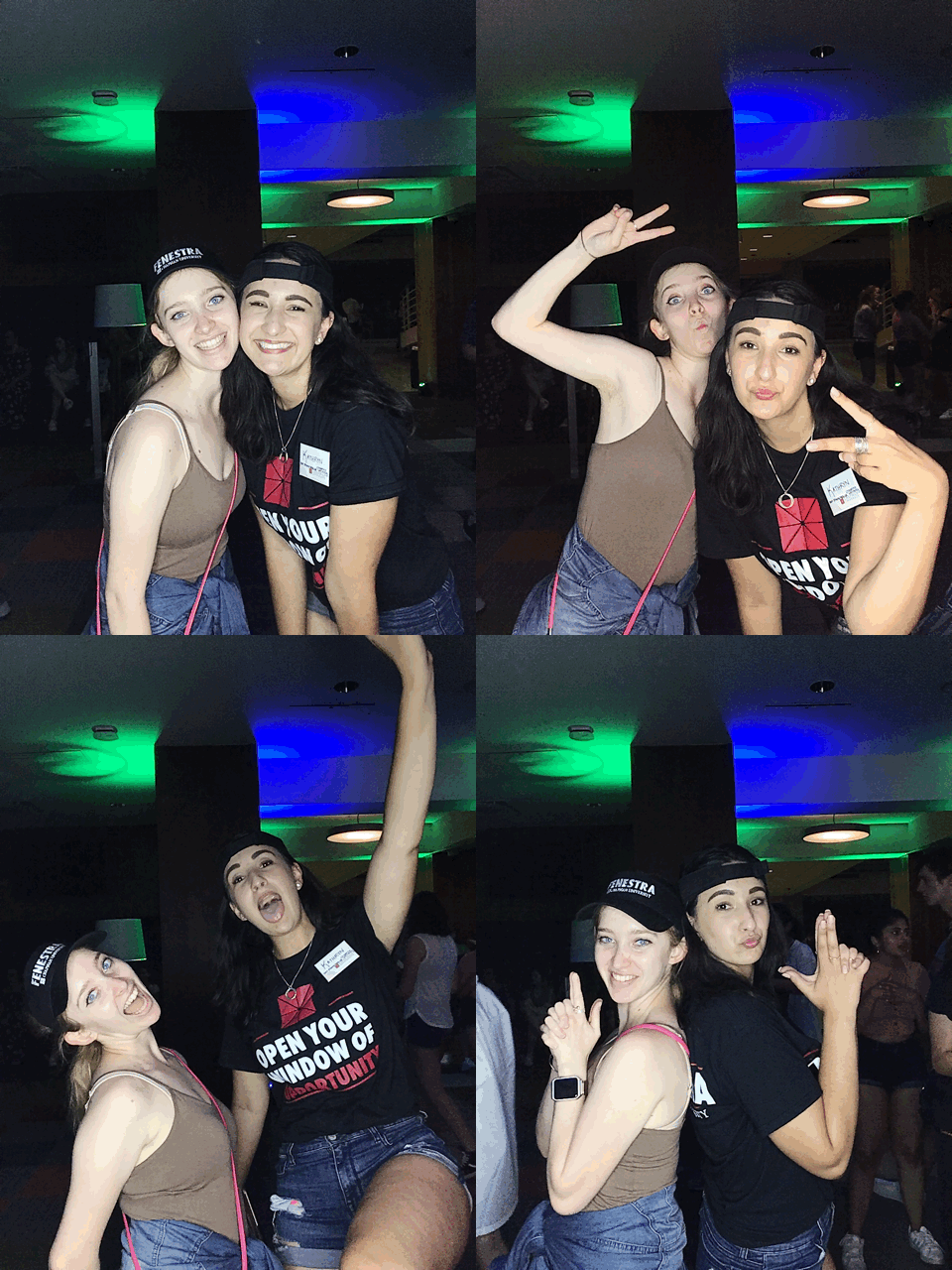
At the end of this summer, I was on the verge of closing my Snapchat account. I rarely talk about anything of substance when I use Snapchat, and I could easily share the photos and videos I send through regular text or email. When my friends send long rant videos about their days, they annoy me and I don’t want to watch the entire clip. Add those facts to my initial resistance to Snapchat and it makes sense why I wanted to get rid of it. Then I went to training to be an Orientation Leader and my OL team leader immediately suggested we create a Snapchat group chat to keep in touch. How could I delete it now when it would be essential in communicating with my team? Even though I barely contributed to the conversation in the group chat, I always enjoyed seeing what the others were up to, and even though Orientation is over that group chat is still used which makes me feel as though I can never get rid of Snapchat. If I did, I would miss wonderful moments such as my OL team trying to generate excitement for the We Are Chapman event during Orientation, or performing our last OL chant after an amazing week.
Even when I was at Disneyland and updating my Snapchat story, I found myself wondering why. I told myself it was because I was waiting in line and I had nothing better to do, but in the back of my mind I knew it was because I wanted to show off this wonderful day I was having. I wanted people to see it, and the next day when I was on Facebook, I wanted all of those people that had not seen my Snapchat the day before to see it too.
Ultimately, I restrained myself and settled for sharing the experience with only the people closest to me either in person or by phone, and I am so glad I did. I would have been so disappointed in myself if I had used Facebook, because it would have been so unnecessary and it would have further solidified the platform’s hold on me. It would have slowly turned me into a person who is obsessed with likes, follows, and creating the perfect online image—a person I do not want to be. If I did not feel the need to call or text someone to tell them all about my day at Disneyland, then they simply did not need to know unless we ran into each other, started talking, and stumbled upon the topic. Besides, people only post the “perfect” moments of their lives anyway. Their stories are filled with gourmet meals, luxurious vacations, and extravagant outings, but never that time they tripped and dropped their food or forgot their passport or had a bad breakup. Because of these unspoken rules, it is hard to trust what people post anyway. So why should I post about my day when I just wanted to get a certain amount of likes and move on?
Going to Disneyland was a great experience. But not everyone needs to know that, and that is okay.

 Tara's Blog